
The Hypoxic-Hyperoxic Paradox: Cellular Regeneration Through Oxygen Fluctuations
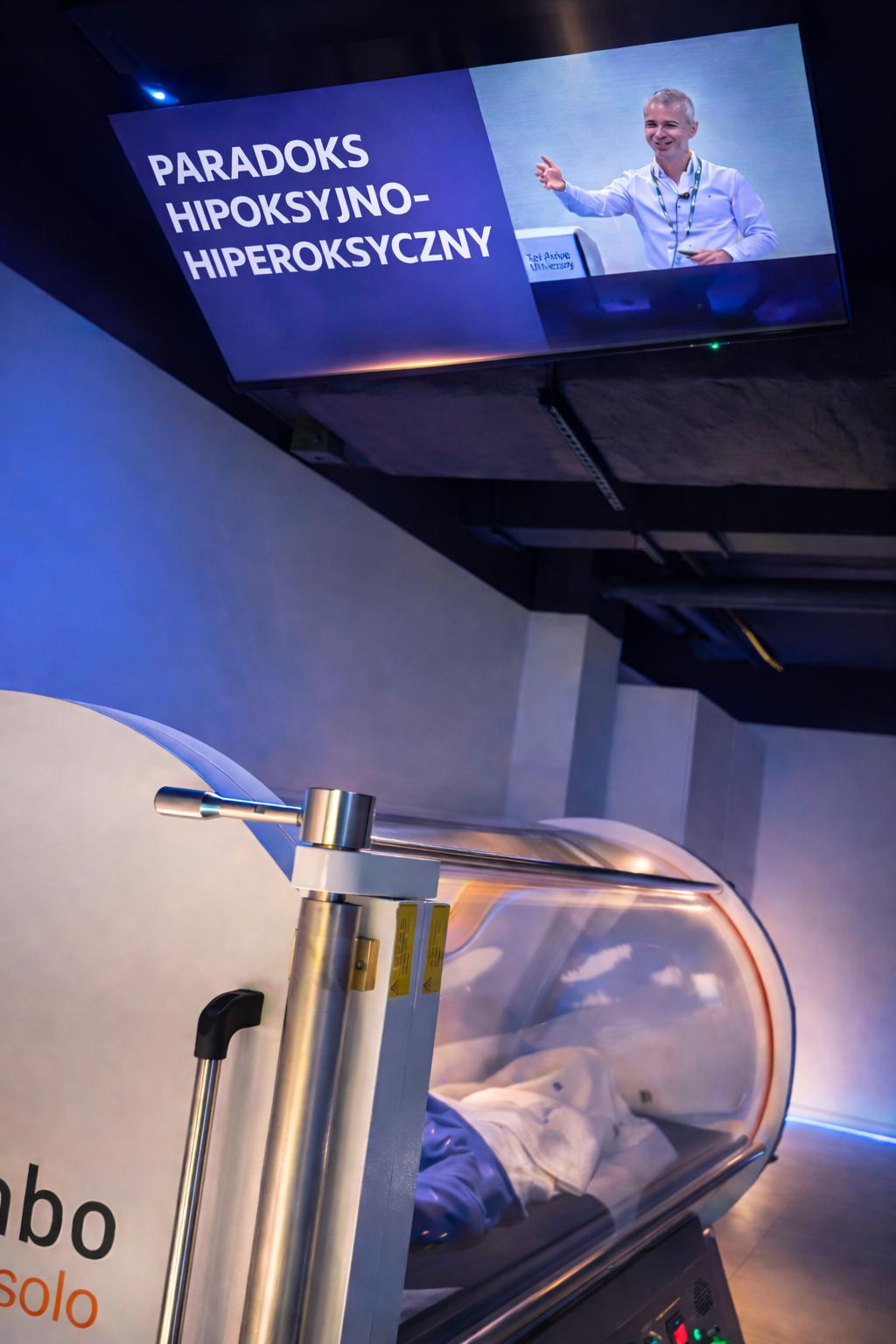
For decades, hyperbaric oxygen therapy was viewed simply through the lens of acute tissue oxygenation: deliver more oxygen to starving tissues. However, seminal research conducted by leading biophysicists and hyperbaric researchers has unveiled a far more profound biological phenomenon: the Normobaric / Hyperbaric Oxygen Paradox (HOP), commonly referred to as the Hypoxic-Hyperoxic Paradox.
This mechanism represents a monumental paradigm shift in regenerative medicine and anti-aging science.
1. The Oxygen Fluctuation Sensed by Cells
In classical biology, it was believed that cells only initiate repair programs (such as vascular growth and stem cell recruitment) in response to acute ischemia or hypoxia. The master regulator of this response is a protein complex known as HIF-1α (Hypoxia-Inducible Factor 1-alpha).
Under normal room air conditions (21% $O_2$), HIF-1α is continuously synthesized and immediately broken down by prolyl hydroxylases. When tissue experiences hypoxia, prolyl hydroxylases are inhibited, allowing HIF-1α to accumulate, enter the cell nucleus, and activate protective genes.
The remarkable discovery of the Hypoxic-Hyperoxic Paradox is that cellular oxygen sensors do not measure absolute oxygen levels, but rather the relative rate of change in oxygen tension ($dO_2/dt$)!
2. How the "Oxygen Deception" Unfolds in the Chamber
When you undergo a session in our medical hyperbaric chamber at 2.0–2.5 ATA, breathing 100% pure medical oxygen:
- Phase 1: Hyperoxic Saturation. Dissolved oxygen in your blood plasma and tissues spikes to supra-physiological levels. Cells produce an abundance of reactive oxygen species (ROS) in controlled physiological quantities, which trigger cellular antioxidant defenses (SOD, catalase, glutathione).
- Phase 2: The Return to Normoxia. When the session concludes, you remove the oxygen mask and decompress back to normal atmospheric air (21% $O_2$).
- Phase 3: The Paradoxical Response. Because cellular oxygen tension drops so rapidly from hyperoxic levels back to baseline, the cell's oxygen sensors perceive this sharp relative decrease as a state of hypoxia!
Consequently, the cell stabilizes HIF-1α and initiates massive regenerative gene expression — without ever suffering the destructive ischemic damage of real oxygen starvation.
3. Biological Cascades Triggered by the Paradox
This intermittent oxygen fluctuation triggers systemic regenerative adaptations:
- Vascular Endothelial Growth Factor (VEGF): Signals the rapid development of new micro-capillary networks in dormant and ischemic tissues.
- Stem Cell Mobilization (CD34+): Signals bone marrow to release up to 8 times more pluripotent stem cells into peripheral blood circulation.
- Sirtuin & Telomerase Activation: Upregulates longevity genes that stabilize telomeres and promote mitochondrial rejuvenation.
- Down-Regulation of Chronic Inflammation: Suppresses NF-kB and pro-inflammatory cytokines while elevating anti-inflammatory interleukins.
Experience True Cellular Regeneration at Oxomedica
To benefit from the hypoxic-hyperoxic paradox, the hyperbaric chamber must achieve sufficient clinical pressure (2.0–2.5 ATA) with 100% pure oxygen. Mild soft chambers (1.3 ATA) cannot trigger this physiological cascade.
Learn more about our advanced medical protocols on our Scientific Research page or schedule your consultation at Oxomedica.